 Closest
Guides
Language
EnglishCurrency
US dollar · $GetYourGuide shows prices in the currency you choose.
Guide · Responsible travel
Is shark cage diving cruel to the sharks?
It is a fair question to ask before you book. Here is how the boats attract sharks, what research in South Africa found about the effect on their behaviour, what guests may and may not do, and how a responsible trip can help conservation.
Check availabilityfrom $133 · cancel at no cost
Editorial team, sharkcagedivinghermanus.comUpdated October 5, 20266 min read9 sources
Quick answer
- 01Research
- Low to medium baiting and chumming had limited impact on shark behaviour in a South African study.1
- 02Protection
- South Africa was the first country to protect the great white, in 1991.2
- 03Guest rules
- On this tour guests may not feed animals or touch marine life.
- 04Conservation
- An operator says its trips educate guests and fund conservation.3
- 05Your role
- Choose a responsible crew and treat the sharks as wild animals.
Why people ask the question
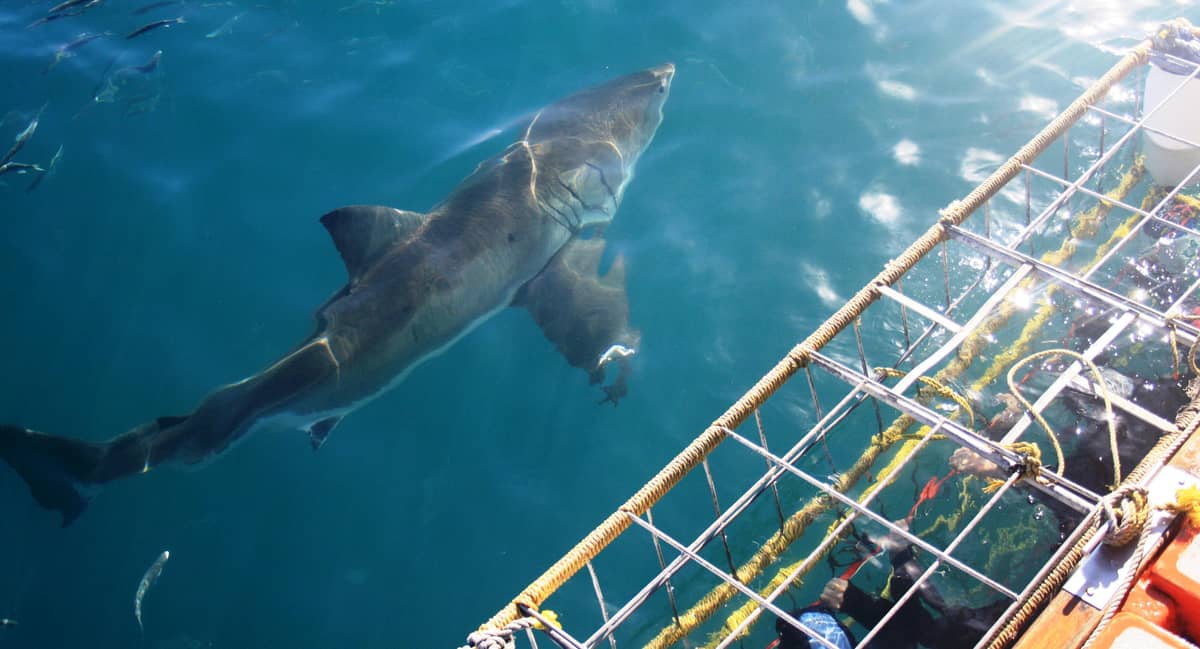
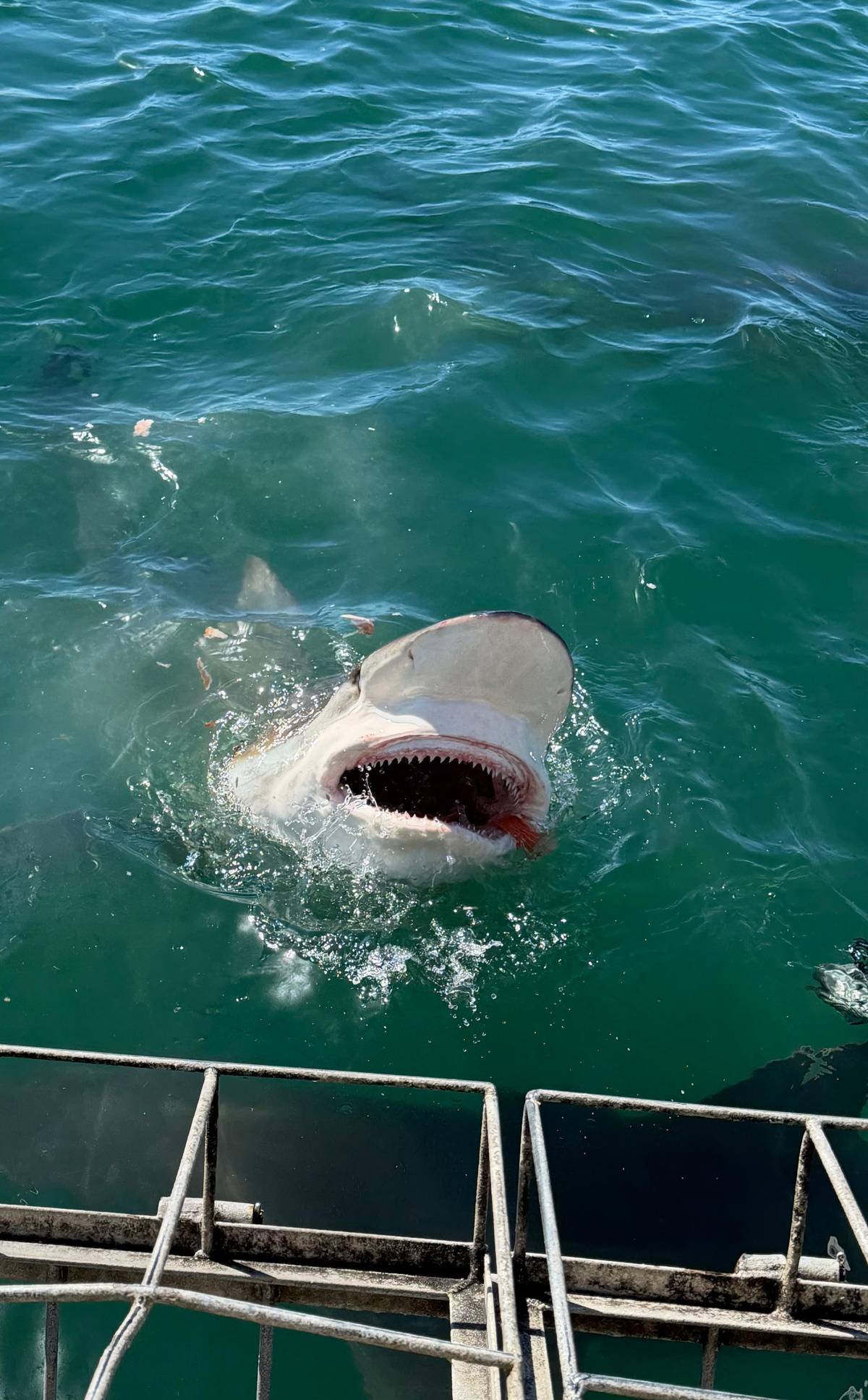
Shark cage diving works because the boats bring sharks to the cage. Crews use bait and chum, a mix of fish scraps and oil in the water, to draw the sharks close enough for divers to see them. To some travellers that sounds like manipulating wild animals for entertainment, and the worry deserves a straight answer rather than a sales pitch. Asking it before you book is a sign of a thoughtful traveller, and good crews welcome the question.
There are really three concerns behind the question. Does baiting change how sharks behave, perhaps teaching them to link boats or people with food? Are the animals harmed or stressed during the encounter? And does the industry do anything for the sharks in return? Each has a different answer.
This page looks at what the evidence says for each, using the research and the operators' own statements. It does not tell you what to decide, but it gives you the facts you need to decide for yourself. Read it with an open mind, and then trust your own judgement.
Context
Sharks and conservation on this coast
What research says about shark behaviour
The most relevant evidence comes from South Africa itself. A research project summarised by Shark Spotters found that low to medium eco-tourism activity, specifically baiting and chumming, had limited impact on shark behaviour.1 In other words, at the levels studied, the sharks did not change their behaviour in a meaningful way. That is the key finding to keep in mind when you weigh up the trip.
That finding has limits, and it is honest to say so. It applies to the levels of activity that were studied, not to any amount of baiting, and it does not cover every species or every site. It is a reason for cautious reassurance, not a blank cheque for unlimited chumming.
The practical lesson for travellers is to prefer crews that work carefully. Such crews use bait to attract sharks to view, not to feed them, and keep the session controlled. If a crew seems careless with bait or encourages guests to interfere with the animals, choose another. Watching how a crew handles the bait line in the first minutes of a session tells you a lot about its standards.
Concerns and evidence
The main worries, weighed up
| Concern | What the evidence says | What you can do |
|---|---|---|
| Baiting changes behaviour | limited impact at low to medium levels | choose a careful crew |
| Sharks are harmed | no touching or feeding by guests | follow the rules on board |
| Tourism ignores conservation | an operator says its trips fund conservation | ask what your trip supports |
| Sharks are disappearing | orcas killed at least 11 white sharks | support protection and research |
From South African research and the operators' own statements.136
Your options
Three ways to meet the sharks' world
Closest Gentler
 No boat
Decision helper
Does a cage dive fit your values?
Tap the concern you have
Choose a careful crew
Research found limited impact at low to medium levels.1
This tour fits
Touching marine life is not allowed for guests.
Pick a conservation-minded crew
An operator says its trips educate guests and fund conservation.3
Watch from the deck
Or visit the seabird sanctuary in Kleinbaai.4
This research demonstrated that low to medium eco-tourism activity (baiting and chumming) had limited impact on shark behaviour.
What guests may and may not do
On the tour sold on this site the rules for guests are clear. Feeding animals and touching marine life are not allowed, and neither are alcohol, drugs or littering. These rules exist for the sharks as much as for you.
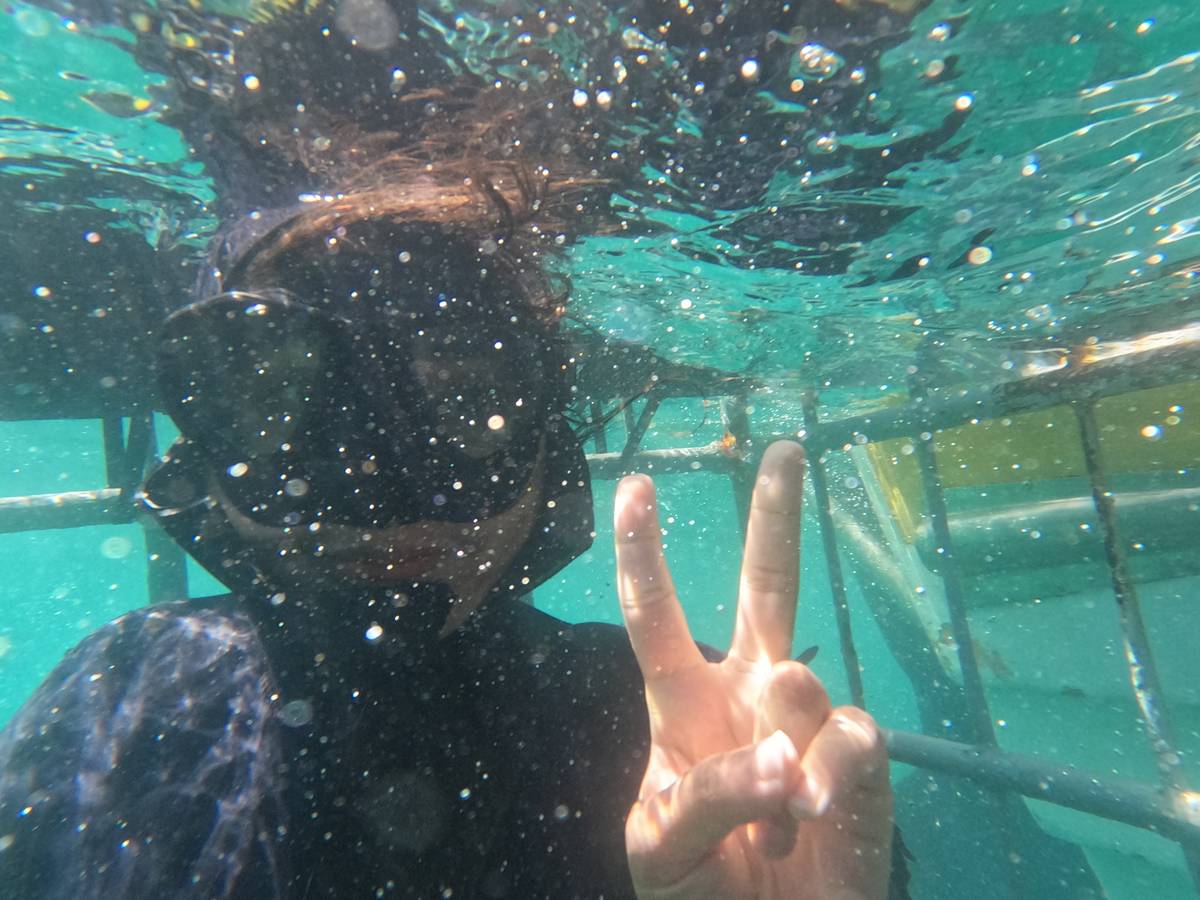
In the cage you keep your hands and feet inside the bars, follow the crew's instructions and let the sharks come and go on their own terms. A calm, quiet cage is better for the animals and, as it happens, makes for better viewing too. Staying still and quiet keeps your attention on the animal in front of you.
Respect continues on deck. Do not throw anything into the water, keep your voice down when the crew asks for quiet and take your rubbish home. Small habits add up when many boats work the same waters every day.
Checklist
Signs of a responsible trip
01
Look for
- A marine biologist on board
- A clear briefing on behaviour
- No touching or feeding by guests
- Honest talk about sightings
02
Avoid
- Guaranteed great white promises
- Crews provoking the sharks
- Rubbish thrown overboard
Video
Is Cage Diving Ethical? Feat. Shark Bytes
Tap play and only then does the video load.
Protection and the bigger threats
Great whites are protected in South Africa. The country was the first to protect the species, in 1991, long before shark tourism became famous.2 A study estimated the South African white shark superpopulation at 908 animals, a small number that explains why protection matters.7
The biggest recent change at Gansbaai did not come from tourism at all. Researchers have documented 11 great white deaths from orcas in South Africa, and say the real figure is probably higher.6 White shark sightings at Gansbaai plummeted after the orca pair Port and Starboard appeared.8
Seen in that context, the question is not only whether cage diving harms sharks, but whether it helps people understand and care about them at a difficult time. That is where responsible operators can make a real difference. Every guest who leaves the boat understanding that sharks are threatened, not monsters, is a small win for the species.
How the trips can support conservation
Trips can be linked to research and education. Marine Dynamics, for example, describes its approach as ethical tourism that educates guests and funds conservation, and it adapted to the decline of great whites by showcasing bronze whaler sharks and other species.3
The wider conservation work around Dyer Island is visible on land too. In Kleinbaai, the African Penguin and Seabird Sanctuary opened in 2015 as a purpose-built marine bird rehabilitation centre.4 Dyer Island once held an estimated 25,000 breeding pairs of African penguins; by 2023 there were fewer than 1,000.9
When you book with a crew that has marine biologists on board, you are paying for that knowledge as well as for the boat. The briefing and the commentary during the trip are where a cage dive becomes a lesson in marine conservation rather than a thrill ride. Ask questions during the trip; crews who love their work will gladly explain what their research shows.
How to choose a responsible trip
Look for a marine biologist on board, a clear safety and behaviour briefing and an operator that talks openly about the sharks' situation. The tour on this site includes a marine biologist briefing and expert insight throughout the experience, and it explicitly forbids feeding or touching marine life.
Read reviews for clues about how crews behave around the animals. Comments about calm handling, good explanations and respect for the sharks are a good sign; comments about chaotic sessions or crews provoking the animals are a warning. Positive reviews that mention the marine biologist by name are often the most reliable sign of a crew that cares.
Finally, be realistic. A responsible crew will not promise you a great white, because nobody can. If an operator guarantees a particular species, ask yourself what they might be doing to keep that promise.
Our view
Based on the evidence available, a well-run cage dive is not cruel. The research summarised by Shark Spotters points to limited behavioural impact at low to medium levels of baiting and chumming, and the strict no-touch, no-feeding rules protect the animals during the encounter.1
That conclusion depends on the operator doing it properly, which is why the choice of crew matters. Good crews keep sessions controlled, explain what you are seeing and connect the trip to conservation; that is the kind of trip worth your money.
If you still feel uneasy, there are gentler ways to enjoy this coast. You can watch from the deck instead of entering the cage, visit the penguin sanctuary in Kleinbaai or spend the day watching whales from the cliffs in Hermanus. Whatever you choose, the sharks of this coast deserve visitors who come with curiosity and respect.
Book your dive
A morning at Shark Alley is waiting off Kleinbaai.
Hold your seat today, pay nearer the time, and change your mind at no cost until a day before the boat leaves.


You ask,we answer.
Does chumming change shark behaviour?
Limited impact, according to research. A South African study found low to medium baiting and chumming had limited impact.1
Are the sharks fed?
Guests may not feed them. On this tour feeding animals and touching marine life are not allowed.
Are great whites protected?
Yes, since 1991. South Africa was the first country to protect them.2
What is the bigger threat to the sharks?
Orcas, recently. Researchers documented 11 great white deaths from orcas in South Africa.6
Do the trips help conservation?
Responsible ones do. An operator says its trips educate guests and fund conservation.3
Can I watch without going in the cage?
Ask the operator. Watching from the deck still gives a close view of the sharks.
How do I spot a responsible crew?
Marine biologist and clear rules. Look for a proper briefing and strict no-touch rules.
Sources
Sources and evidence
- 1Shark SpottersShark Behaviour and Movement↩
- 2Marine DynamicsWhite Shark Research↩
- 3↩
- 4Dyer Island Conservation TrustAfrican Penguin & Seabird Sanctuary↩
- 5Dyer Island Conservation TrustCarcass of Orca predated white shark near Gansbaai, 27 June 2021↩
- 6↩
- 7PLOS ONE (Public Library of Science)Gauging the Threat: The First Population Estimate for White Sharks in South Africa Using Photo Identification and Automated Software↩
- 8Nature AfricaOrcas blamed for missing great white sharks↩
- 9Dyer Island Conservation TrustThe African Penguin & Seabird Sanctuary: Ten Years On - From Fledgling to Fully Feathered↩
Keep reading