 Best for great whites
Winter
June to September
- Sharks
- great white window
- Weather
- stormy at times
- Water
- about 15-20°C
Guides
Language
EnglishCurrency
US dollar · $GetYourGuide shows prices in the currency you choose.
Guide · Best time
The boats go out year-round when the sea allows, but the months are not equal. Here is when great whites have been easiest to find, what the weather and water do, and how to plan around both.
Editorial team, sharkcagedivinghermanus.comUpdated October 5, 20266 min read9 sources
Quick answer
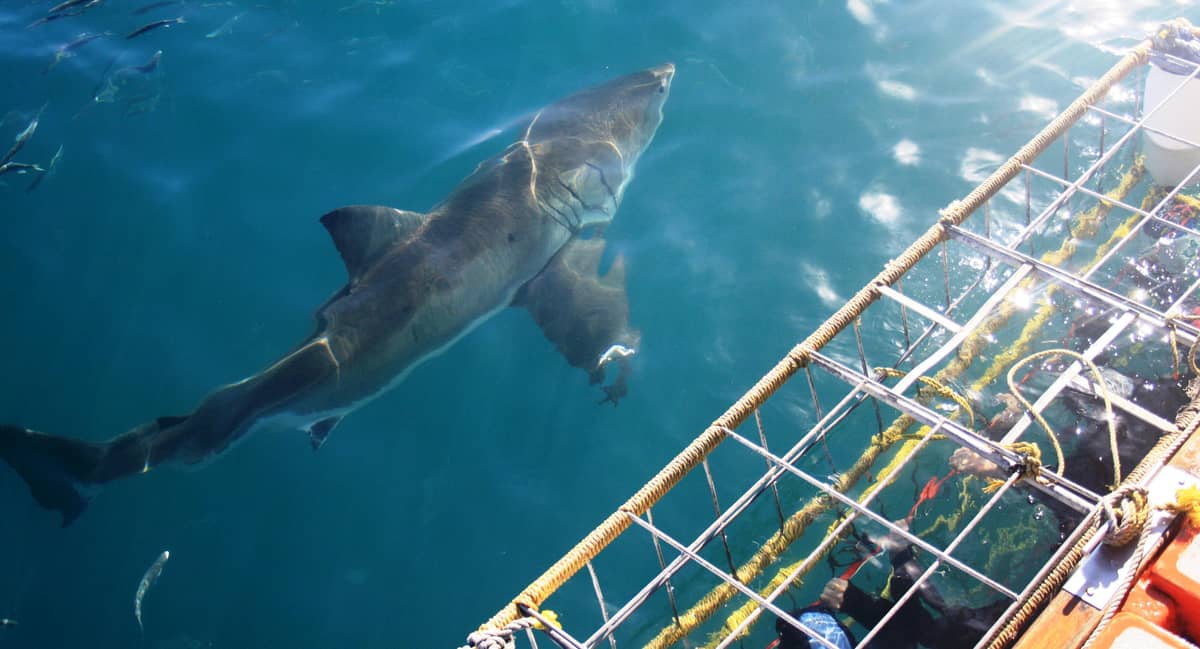
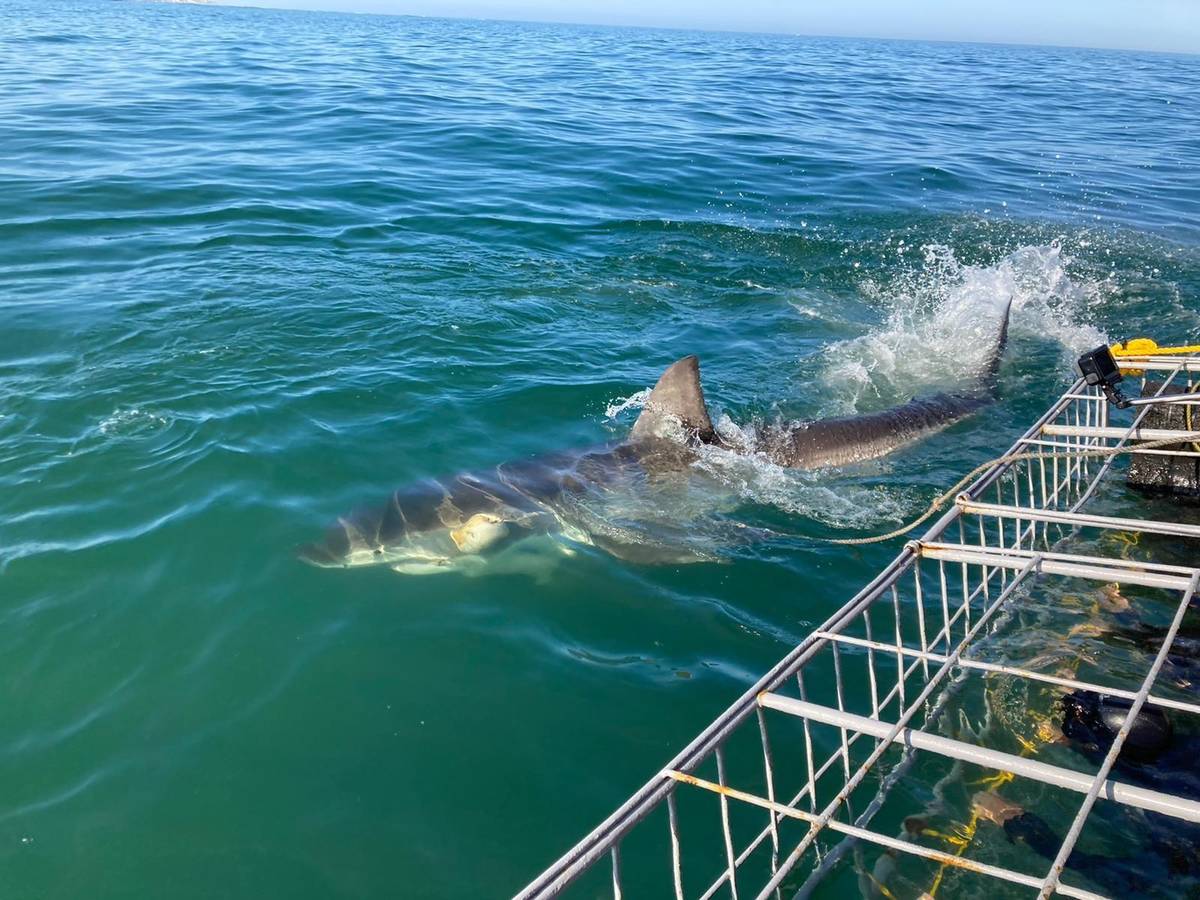
If great white sharks are your goal, aim for the southern winter. In general, the best time of year to view great whites in the Gansbaai area is between June and September, when the visibility in the water is at its best and many migrating sharks come to spend a few months around Dyer Island.1 That is the best time for shark cage diving in Gansbaai if you want the classic encounter.
The picture has changed since the orca pair Port and Starboard arrived and white shark sightings plummeted.5 The winter months are still your best chance, but they are a chance, not a promise, and the boats now also show bronze whalers and other species.6
Outside the peak months the trips still run whenever the weather allows. If your travel dates are fixed, go anyway and enjoy whatever the sea brings; if you can choose, the winter window gives you the strongest odds. Remember that a shark season is a pattern, not a timetable: some weeks within the window are quiet and some weeks outside it surprise everyone, which is why the most recent reports matter more than any calendar.
The year
Dec to Mar
Long days on deck, cooler water.3
Apr to May
More rain, shorter days, boats run when they can.
Jun to Sep
Best visibility, migrating sharks around Dyer Island.1
Aug to Oct
Southern right whales easiest to see near Hermanus.4
Oct to Nov
Whales still around, fewer rain days.7
The months that are best for sharks are also the stormiest. The Cape winter goes hand in hand with wind, rain and stormy weather, which can prevent boats from going to sea, and operators advise having more than one day set aside for shark viewing.2
The climate chart on this page shows what that means on land. At the NOAA station nearest the coast, July averages a daily high of 17.8 °C and a low of 11.1 °C, with 7 days of at least 2.5 mm of precipitation.8 Pack layers, a windproof jacket and a sense of humour about the forecast. The same table shows the short winter days, so expect an early start in the half-light and a return around lunchtime.
Plan your winter trip with a buffer. Book early in your stay rather than on your last day, keep the following morning free and choose a booking with free cancellation. If the crew calls the trip off, you have not lost anything except an alarm clock. Bring something to read or a deck of cards for the waiting time in case the crew delays the departure for the wind to drop.
Climate
Month by month
| Month | Daylight (h) | Darkness (h) | High / low | Wet days | White sharks |
|---|---|---|---|---|---|
| Jan | 14.2 | 9.8 | 25 / 18 °C | 2 | possible |
| Feb | 13.4 | 10.6 | 25 / 19 °C | 2 | possible |
| Mar | 12.4 | 11.6 | 23 / 17 °C | 2 | possible |
| Apr | 11.3 | 12.7 | 21 / 15 °C | 5 | possible |
| May | 10.3 | 13.7 | 20 / 14 °C | 5 | possible |
| Jun | 9.8 | 14.2 | 18 / 12 °C | 6 | best |
| Jul | 10 | 14 | 18 / 11 °C | 7 | best |
| Aug | 10.8 | 13.2 | 18 / 11 °C | 6 | best |
| Sep | 11.9 | 12.1 | 19 / 12 °C | 5 | best |
| Oct | 13 | 11 | 20 / 14 °C | 3 | possible |
| Nov | 14 | 10 | 22 / 15 °C | 3 | possible |
| Dec | 14.5 | 9.5 | 24 / 18 °C | 2 | possible |
Daylight at mid-month, daily highs and lows as averages, wet days counted from 2.5 mm. NOAA 1991 to 2020.8 Season according to Marine Dynamics.1
Seasons
Best for great whitesJune to September
 Whales and calmer days
 Warmest on deck
Decision helper
Tap your priority
In general, the best time of the year to view the Great White Sharks in the Gansbaai area is between June and September when the visibility in the water is at its best.
Here the coast has a surprise in store. The water off Gansbaai is generally warmer in the austral winter, about 15-20°C, than in the austral summer, when it is about 10-15°C.3 So the cold air of July can sit above water that feels kinder than in January.
Either way, you wear a thick wetsuit, hood and boots, which are part of the tour sold on this site. The dive itself lasts about 20 minutes, with the chance of a second turn, so cold water is a short challenge rather than an ordeal.
What you feel most is the wind on deck after you climb out. Bring a warm jacket and a towel, and use the hot showers at the base after the trip, which are included. If you are sensitive to cold, a thin thermal layer under the wetsuit is a simple way to stay warmer in cool seas.
Checklist
Video
Tap play and only then does the video load.
Summer brings long days and warmer air. In January the station averages a daily high of 24.6 °C, with just 2 days of meaningful precipitation.8 Mornings on deck are pleasant, and the drive along the coast is easier in the light.
The trade-off is the sharks. Great whites have been harder to find outside the June to September window, so summer trips lean more on the other sharks, the seals of Geyser Rock and the seabirds around the islands.19 Close passes from bronze whalers can make a summer morning just as exciting.
April, May, October and November sit in between. They can bring calmer days than mid-winter and still some of the wildlife of the peak months. If you dislike rough seas, these shoulder months are worth a look. They are also quieter months in Hermanus, which can make accommodation easier to find and the cliff path more peaceful.
Winter and spring have a second attraction on this coast. Near Hermanus, southern right whales start arriving in June and July, and they are easiest to see in August, September and October.4
Marine Dynamics notes that it sees whales throughout the year, with more emphasis on whale watching during the southern right season from June to November.7 On a shark trip in those months it is worth keeping an eye on the horizon on the way out and back.
That overlap makes August and September an attractive window for a combined stay: sharks from Kleinbaai in the morning, whales from the cliffs in Hermanus in the afternoon. Our guide to whales and sharks in one trip covers the combined tours. From the cliff path in Hermanus you can watch the whales for free, which makes a perfect counterpoint to a morning in the cage.
June to September is the great white window, with the clearest water and the roughest weather; book flexibly and keep a spare day.12 These are also the months when whales begin to arrive on the coast.
October and November keep the whales and often bring friendlier weather, with fewer rain days at the station than in mid-winter.8 December to March are the warm, dry months on land and the coolest in the water, a good time if comfort on deck matters more than great whites.3
April and May are the transition. Rain increases and the days shorten, but the boats run whenever conditions allow. Use the table on this page to compare the months at a glance before you fix your dates. Whatever month you pick, the sea decides on the day, and a relaxed attitude makes every season enjoyable.
Start with what you most want to see. If it is great whites, choose a date between June and September and accept that the weather has a vote.1 If it is simply sharks close to the cage, any month can work, and the calmer months make the boat more comfortable.
Then build flexibility in. On this site's tour the seat is held without upfront payment, and calling it off 24 hours or more before the start costs nothing. Combined with a spare morning, that turns the weather from a risk into a minor inconvenience.
Finally, check the latest reviews and the operators' own trip logs a week or two before you go. They tell you what the boats have been seeing right now, which is the best season guide of all. Ask the crew at check-in too; they will tell you honestly what the last few trips brought and what they expect from the conditions that morning.
Book your dive
Hold your seat today, pay nearer the time, and change your mind at no cost until a day before the boat leaves.
June to September. Visibility is best and migrating sharks stay around Dyer Island.1
Yes, when the sea allows. Winter storms can stop trips, so keep a spare day.2
In winter. Generally 15-20°C in winter and 10-15°C in summer.3
In whale season, possibly. An operator sees whales year-round, with emphasis from June to November.7
Cool and wet. The station averages a high of 17.8 °C and 7 rain days.8
Not for sharks in general. Great whites are harder to find, but other sharks and seals are there.
As early as you can, flexibly. Hold a seat now, pay later, and cancel at no cost until 24 hours ahead.
Sources
Keep reading