Guides
Language
EnglishCurrency
US dollar · $GetYourGuide shows prices in the currency you choose.
Guide · Safety
Is shark cage diving safe? What really happens in the cage
The cage is the safe part. Here is how a trip off Gansbaai keeps you protected, what the real risks are, which shark cage diving requirements apply and how to prepare so the morning feels exciting rather than scary.
Editorial team, sharkcagedivinghermanus.comUpdated October 5, 20266 min read6 sources
Quick answer
- 01The short version
- An operator reports no shark-related injuries to guests on its boat since 2005.1
- 02Real risks
- Seasickness, dehydration and carelessness on the boat or cage, not the sharks.1
- 03No licence
- You do not need a scuba qualification to go in the cage.2
- 04Before you board
- A marine biologist runs a safety briefing and you wear a life vest to the boat.3
- 05Who cannot go
- This tour is not suitable for children under 5.
How the cage keeps you safe
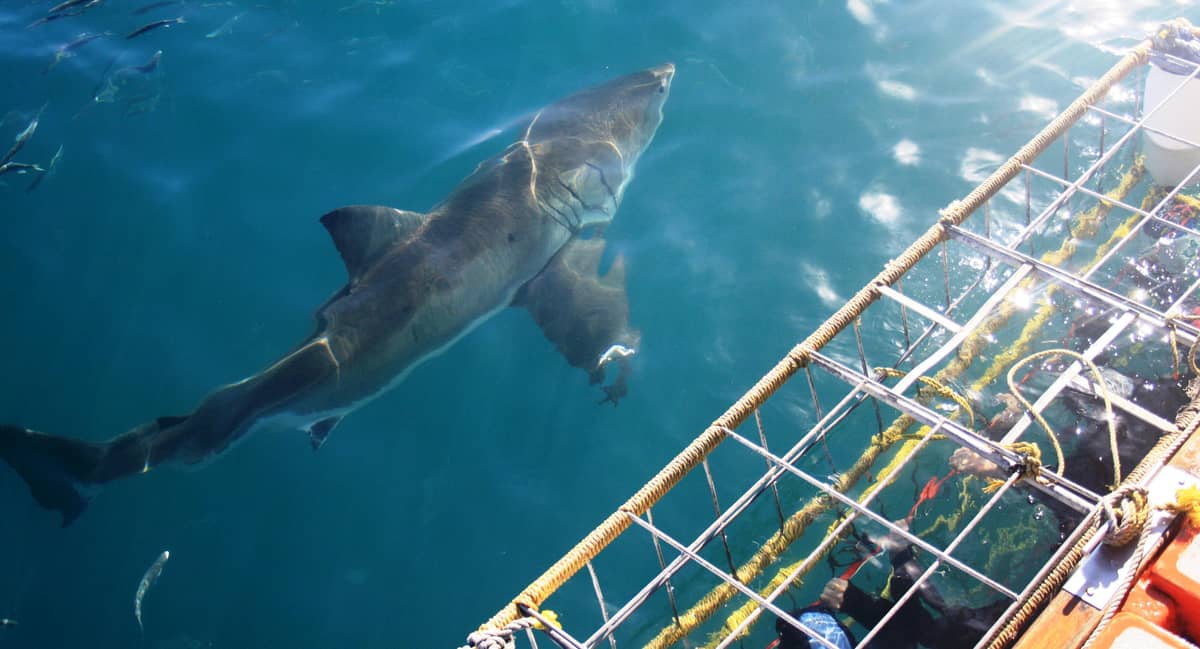
The idea is simple. A strong metal cage floats alongside the boat with its top above the water line, and you climb in with a few other divers. You hold your breath and sink just below the surface to watch, then come up again. The sharks swim outside the bars; you stay inside, close enough to see every detail of their skin and eyes.
You do not use scuba gear. An operator at Gansbaai explains that you do not need a scuba certification at all, and that its divers have ranged from 2 to 100 years old.2 On the tour sold on this site you get a wetsuit, mask, boots, hood and weight belt, and the dive itself lasts about 20 minutes, with the chance of a second turn.
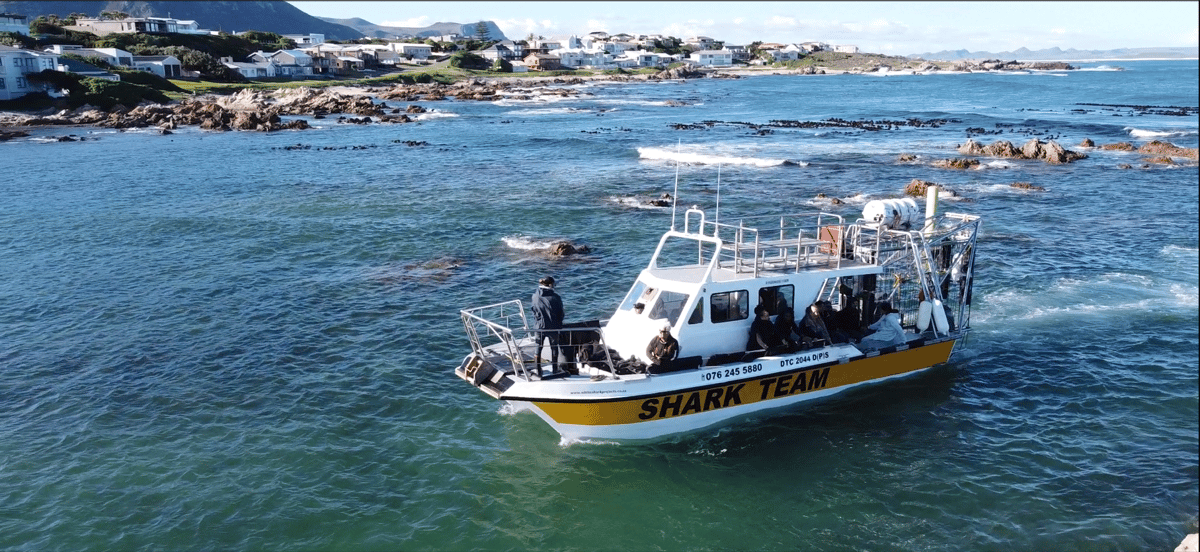
The crew controls the session from the deck. They decide when the cage is open for divers, they call guests in and out, and they watch the water constantly. Your job is to follow their instructions, keep your hands and feet inside the bars and enjoy the view. If you feel uncomfortable at any point, simply climb out; nobody minds, and you can watch from the deck until you are ready to go back in.
Step by step
How a safe cage dive works
-
At the base
Briefing
A marine biologist explains safety and what to expect.3
-
Harbour
Life jacket on
You walk to the boat wearing a life vest.3
-
Kitting up
Wetsuit and mask
Wetsuit, mask, boots, hood and weight belt are provided.
-
In the cage
Breath-hold dives
About 20 minutes in the cage, with the chance of a second dive.
-
Afterwards
Warm up
Hot showers, towels and a light lunch at the base.
What the safety record says
The most useful evidence comes from the operators themselves. Marine Dynamics, which runs trips from Kleinbaai, states that apart from incidents related to carelessness on the boat or cage, and seasickness and dehydration, no shark-related injuries or accidents to guests have been recorded on its boat since 2005.1
That sentence is worth reading twice, because it tells you where the real risks lie. The sharks are not the problem; slipping on a wet deck, feeling sick in the swell or getting cold and dehydrated are far more likely to spoil your day. All of them can be managed with a little preparation.
There is no such thing as zero risk on the open sea, and you should not trust anyone who promises it. But for a guest who listens to the briefing and follows the crew, shark cage diving at this coast is a well-practised routine rather than a gamble. Ask the crew about their own routines when you arrive; hearing them describe how they run the cage is reassuring in itself.
Water temperature
How cold the sea is off Gansbaai
Risks
The real risks and how to handle them
| Risk | How likely | What helps |
|---|---|---|
| Shark bite in the cage | none recorded on that boat since 2005 | follow the crew, hands inside |
| Seasickness | a listed incident | tablets before boarding, eyes on the horizon |
| Dehydration | a listed incident | drink water all morning |
| Slipping on deck | carelessness is listed | sensible shoes, move slowly |
| Cold | water 10-20°C | wetsuit, hood, warm jacket |
From an operator's own safety statement and its sea temperature figures.14
Decision helper
Is the cage right for you?
Tap the worry that fits you
No shark-related injuries to guests on an operator's boat since 2005.1
No scuba qualification is needed.2
Bring tablets; seasickness is a listed incident.1
The sea is about 10-20°C depending on the season.4
Children under 6 stay off this tour's boat.
Apart from incidents related to carelessness on the boat or cage, and seasickness and dehydration, no shark-related injuries or accidents to guests have been recorded on our boat since 2005.
The briefing and the walk to the boat
Safety starts on land. At the operator base you meet a marine biologist who runs through a pre-trip safety briefing, what to expect at sea and which sharks and other species you are likely to see. Then you put on your life vest and walk the short way down to the harbour to board.3
Listen carefully during the briefing even if you are impatient to get going. It covers how to climb in and out of the cage, where to put your hands, how to move around a pitching deck and what to do if you feel unwell. Those few minutes are the best safety equipment on the trip.
On the tour sold here, the briefing comes with breakfast, and the marine biologist stays with the group during the trip. Ask questions: crews are used to nervous first-timers and are happy to explain how everything works.
Checklist
What you need, bring and get
You need
- No diving experience
- To follow the crew's instructions
- To be comfortable with short breath-holds
- Children aged 6 or over
Bring
- Anti-seasickness tablets
- A warm jacket and sensible shoes
- Sunscreen, hat and sunglasses
- Water to drink
Provided
- Wetsuit, mask, boots, hood, weight belt
- Life jacket and safety briefing
- Hot showers and towels
Video
Cage Diving with SHARKS in South Africa!
Tap play and only then does the video load.
Seasickness is the real enemy
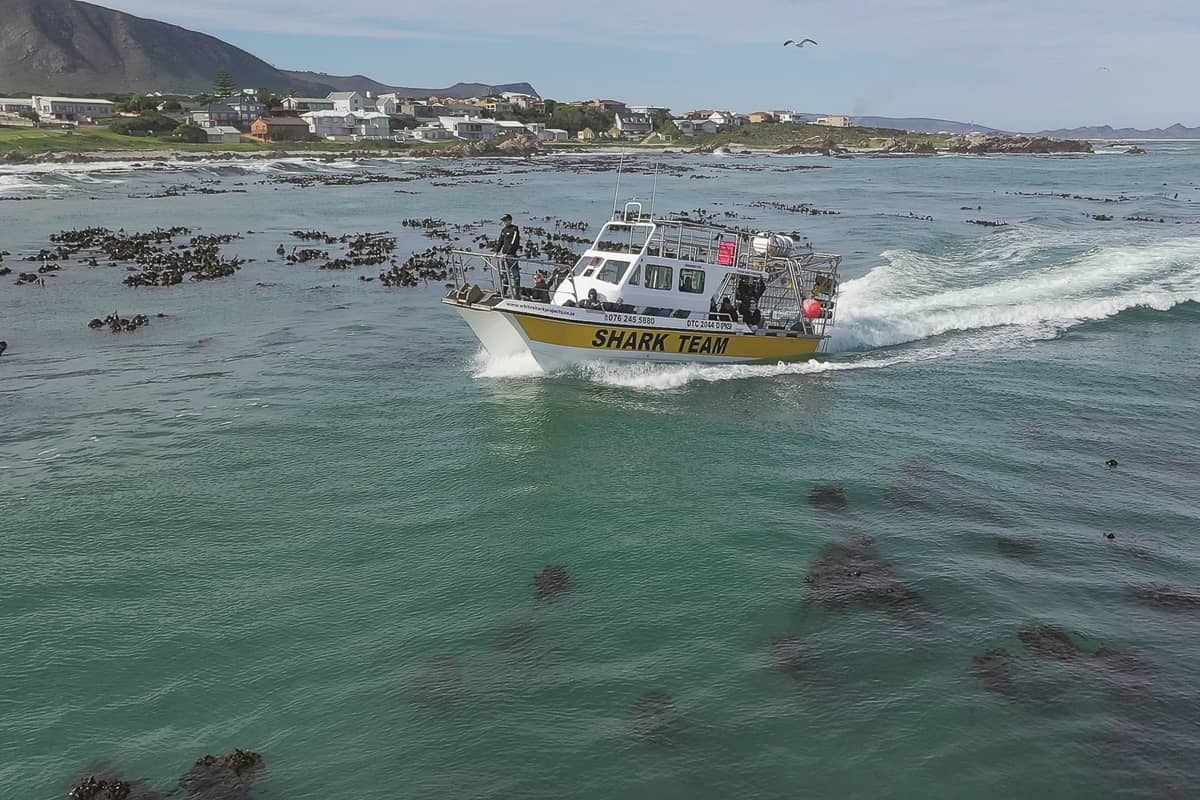
If anything ruins a shark morning, it is the sea rather than the sharks. The boat anchors near the islands and rolls in the swell for a long time, which is exactly the kind of motion that makes people queasy. Seasickness is listed among the few incidents an operator has had on its boat.1
The listing for this site's tour strongly recommends anti-seasickness tablets, and they are not included, so bring your own. Take them as your pharmacist advises, usually some time before you board rather than once you already feel unwell. Eat a light breakfast, stay on the open deck, keep your eyes on the horizon and sip water. Ginger biscuits and fresh air help some people too, and the crew will point you to the calmest spot on deck.
Winter adds its own challenge. In the Cape winter, wind, rain and stormy weather can stop the boats from going out at all, and operators advise setting aside more than one day.5 A cancelled trip is a safety decision, not bad service, and a flexible booking makes it painless.
Cold water and what to wear
The water off Gansbaai is cool. It is generally warmer in the austral winter, at about 15-20°C, than in summer, when it is about 10-15°C.4 A thick wetsuit, hood and boots are provided on this tour, and they make a real difference during the 20 minutes or so you spend in the cage.
Out of the water, the wind is the bigger problem. Bring a warm jacket, sensible shoes and a towel, plus sunscreen, a hat and sunglasses for the hours on deck. After the trip you can use the hot showers at the base, which are included and very welcome. A dry set of clothes for the ride home is a small luxury you will not regret.
Drink water during the morning, even if it is cold. Dehydration is listed alongside seasickness as a real issue on these boats, and it sneaks up on people who are busy watching the sea.1
Shark cage diving requirements
The rules for joining this tour are short. No diving experience is needed, you do not need to swim like an athlete, and you only need to be comfortable putting your face in the water for short breath-holds while you hold the bars. The crew helps you in and out of the cage. Contact lenses are fine under a mask for most people, but bring spare glasses for the boat.
Age is the main limit. This tour is not suitable for children under 5, and the operator keeps children under 6 off the boat because of the hours at sea, offering babysitting at the base at an extra cost. Some other operators accept very young divers, so families should check each listing carefully.2
The rules on board are about respect as much as safety: no alcohol or drugs, no littering, and no feeding or touching marine life. If you have a medical condition, a heart problem or are pregnant, ask the operator before booking, because the trip involves cold water, a rolling boat and an early start.
Is it safe for the sharks too?
Safety is not only about people. Cage diving attracts sharks to the boat with bait and chum, and that raises a fair question about the animals. A research project in South Africa found that low to medium levels of this eco-tourism activity had limited impact on shark behaviour.6
Our separate guide on whether shark cage diving is cruel goes into this in more depth, including the research and the conservation work that the trips help to fund. In short, choose a permitted operator with marine biologists on board and follow the no-touching rule.
Treat the day as a privilege rather than a theme park ride. The sharks are wild animals in their own habitat, and the calmer and quieter guests are in the cage, the better the encounter tends to be for everyone. Watching quietly also helps your photographs, because a steady hand and a calm breath see more.
Book your dive
A morning at Shark Alley is waiting off Kleinbaai.
Hold your seat today, pay nearer the time, and change your mind at no cost until a day before the boat leaves.


You ask,we answer.
Has anyone been hurt by a shark in the cage?
Not on this record. An operator reports no shark-related injuries or accidents to guests on its boat since 2005.1
Do I need a diving licence?
No. No scuba qualification is needed for cage diving at Gansbaai.2
Do I need to be a strong swimmer?
No. You stay inside the cage, hold the bars and breathe at the surface between short dives.
How cold is the water?
About 10-20°C. It is generally 15-20°C in winter and 10-15°C in summer.4
Can children join?
Not under 5 on this tour. The operator keeps children under 6 off the boat and offers babysitting at extra cost.
What is the biggest risk?
Seasickness. Seasickness, dehydration and carelessness are the incidents an operator lists.1
What happens in bad weather?
The boat may not go out. Wind and storms can stop trips in winter, so keep a spare day.5
Sources
Sources and evidence
- 1Marine DynamicsFrequently Asked Questions - Marine Dynamics↩
- 2Marine DynamicsFrequently Asked Questions - Marine Dynamics↩
- 3Marine DynamicsShark Cage Diving - Marine Dynamics↩
- 4Marine DynamicsFrequently Asked Questions - Marine Dynamics↩
- 5Marine DynamicsViewing Seasons - Marine Dynamics↩
- 6Shark SpottersShark Behaviour and Movement↩
Keep reading